
Heated bathroom floors are one of the lower-cost comfort upgrades in a remodel and one of the easier ones to regret skipping. For one room, an electric system is usually the right call, and published estimates put it at $8 to $15 per square foot before the new floor. A 40-square-foot floor run three hours a day costs about $8 to $10 a month at the U.S. average residential rate and $15 to $18 a month at California’s, by this guide’s arithmetic.
The catch is timing. The heating goes in under the tile, so the decision belongs to the design phase, not the week after demolition. This guide prices heated bathroom floors by type from named sources, works out the running cost in California rates, and shows where the heating fits in the build. If you are still choosing surfaces, our look at the best tile and flooring options for a bathroom remodel is a good companion. A wellness-inspired bathroom retreat shows where warmth fits in a bigger bathroom plan.
Heated bathroom floors at a glance
A heated floor is a comfort upgrade, not a heating plan. It warms the surface you stand on and will not heat the room. Most bathrooms use electric cable or mat in the thin-set bed under the tile, wired to a floor-sensing thermostat.
Family Handyman’s electric versus hydronic guide calls electric the usual choice for a small room, and says adding it when you install a new floor adds “only $200 to $300” to the project. That is an editorial estimate with no region or year, so treat it as the low end. HomeGuide’s heated floor cost page puts the average for a typical bathroom at $500 to $2,800, including new flooring.
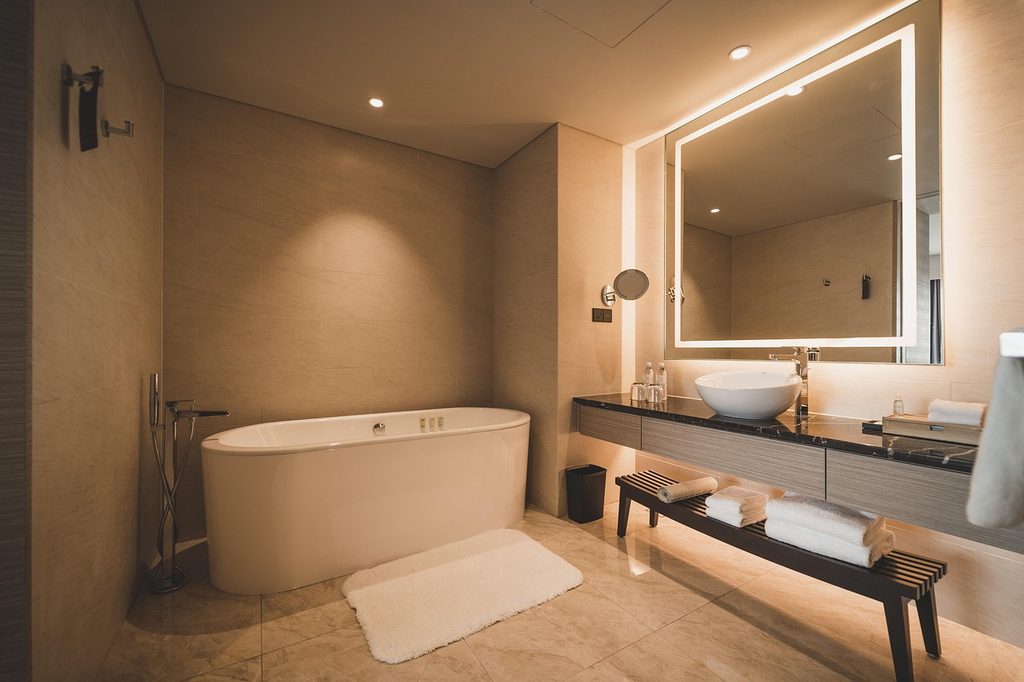
How many people actually buy it? Houzz’s 2025 Bathroom Trends Study found radiant flooring in 7 percent of renovated bathrooms. That is a national figure for homeowners on Houzz, and it tells you the feature is a minority choice that most renovators still skip. Our guide to primary bathroom upgrades puts it beside the other big-ticket options.
One limit applies to every number here. This guide found no independent county-level price data for Marin, Sonoma or Napa, and the figures below come from national cost sites and manufacturers. Treat them as a way to compare heating options, then get a local quote.
Electric mat, loose cable or hydronic
Electric mat, loose cable and membrane systems
There are three electric formats and one hydronic route, and they differ more in installer labor than in comfort. The table names each source, because a manufacturer’s price and a cost site’s price are not the same kind of evidence.
| Type | How it works | Strength | Trade-off | Source |
|---|---|---|---|---|
| Loose cable with strips | Cable is laid in a serpentine pattern and embedded in thin-set | Lowest product cost | Longest install time, and a nicked cable disables the system | Family Handyman, WarmlyYours |
| Electric mat | Cable pre-attached to a mesh or solid roll | Mid-range cost, fastest and easiest to lay | Costs more than loose cable | WarmlyYours, Family Handyman |
| Cable in a membrane | Cable snaps into an uncoupling sheet | Faster than loose cable, tile can follow right away | Highest material cost | WarmlyYours, Schluter |
| Hydronic | Warm water runs through PEX tubing | Lower running cost for large areas | Needs a boiler or water heater and a pump | Family Handyman, HomeGuide |
WarmlyYours priced one 60-square-foot bathroom, with about 38 square feet of heated floor, three ways in 2026. Product-only cost came to $414 for cable with strips, $534 for a mat and $772 for cable with a membrane. The $358 spread is a product-versus-labor trade, because the dearer systems cut the hours an installer spends on the floor. That is a manufacturer’s example, so weigh it with care.
Schluter-Systems, which makes a membrane system, says its cables need no self-leveling compound/Schluter-DITRA-HEAT/p/DITRA_HEAT) to encapsulate them under tile, and that tile can go down right after the cables are installed with unmodified thin-set. Ask your tile setter which format they have laid before. Our guide to the best materials for a primary bathroom remodel helps you match the surface to the system.
When hydronic heating makes sense
Warm-water heat suits large floors and whole-house plans, and Family Handyman says hydronic systems may cost less to install than electric at 200 square feet of floor or more. A single bathroom rarely reaches that, so the numbers favor electric. If floor area is tight, maximizing space in a small bathroom matters more than the heating type.
Installed cost by bathroom size
Installed cost scales with heated area, so a half bath and a primary bath sit far apart. The table sets two published estimates side by side. HomeGuide’s figures exclude new flooring, while WarmlyYours’ estimates cover a complete electric installation in 2026.
| Bathroom | Size | HomeGuide, without new flooring | WarmlyYours installed estimate |
|---|---|---|---|
| Half bath | 20 to 30 sq ft (HomeGuide), 11 to 20 sq ft (WarmlyYours) | $200 to $500 | $400 to $800 |
| Full bath | 40 to 50 sq ft (HomeGuide), 36 to 40 sq ft (WarmlyYours) | $300 to $800 | $700 to $1,400 |
| Primary bath | 60 to 160 sq ft (HomeGuide), 60 to 100 sq ft (WarmlyYours) | $500 to $2,400 | $1,200 to $2,500 |
The two sources do not agree, and their size bands differ, so do not read across a row as one project. WarmlyYours also sells the product, which can push its estimates toward the upper side. Use the table as a rough range.
Extra costs to include in the estimate
A few line items sit outside both columns. HomeGuide lists a floor thermostat at $140 to $350, a dedicated circuit at $250 to $900 and permits at $50 to $800. It also lists subfloor repair at $100 to $570, a cost that only shows once the old floor is up. WarmlyYours puts the breaker panel connection at $200 to $500.
Hydronic runs higher in a single room. HomeGuide gives $7 to $17 per square foot, plus $600 to $3,100 for a dedicated water heater. Our advice on planning a guest bathroom renovation budget shows how to carry a line like this inside a total budget, and our tips for saving when remodeling cover where to trim elsewhere.
Running cost at California electricity prices
Cost pages usually quote a national running cost, and California is not national. Heated bathroom floors cost more to run here than the usual estimates suggest.
The U.S. Energy Information Administration’s Electric Power Monthly puts the average residential price in July 2026 at 33.61 cents per kWh in California and 18.31 cents for the U.S. WarmlyYours says a bathroom floor draws 12 to 15 watts per square foot while it is heating. The table below combines those two published numbers.
| Heated area | Use | Monthly energy | At U.S. rate (18.31 cents) | At California rate (33.61 cents) |
|---|---|---|---|---|
| 40 sq ft | 3 hours a day | 43 to 54 kWh | $7.91 to $9.89 | $14.52 to $18.15 |
| 40 sq ft | 6 hours a day | 86 to 108 kWh | $15.82 to $19.78 | $29.04 to $36.30 |
Estimated monthly energy use
The arithmetic is this guide’s own, and it is an upper bound. WarmlyYours says the thermostat cycles the heating off once the floor is warm, so real use sits “well below the maximum.” HomeGuide puts a heated bathroom floor at $5 to $10 or more per month, which sits near the first row.
One caution applies. The 33.61 figure is a statewide average for one month, so your utility and rate plan will change the result. A programmable thermostat is the cheap way to run it, because the floor warms for your morning routine and stays off while you are out. Our notes on bathroom design trends show how that fits a spa-style plan.
Fitting the heating into the remodel sequence
Heated floors go in after rough-in and subfloor work, and before tile. That order is the biggest planning rule, and it is why you cannot add them cleanly later. The subfloor must be flat first, since Schluter says any subfloor leveling has to happen before its membrane goes down.
The usual order runs in four moves. Demolition and framing come first, then plumbing and electrical rough-in, then subfloor repair and leveling. After that, an electrician sets the heating cable or mat and a tile setter follows. Warmup says its peel-and-stick membrane lets electricians install and test the heating before the tile setters arrive. That test matters, because a broken cable under finished tile means demolition.
Coordinate the electrician and tile setter
Good trade sequencing starts on paper. Our process page shows how the six steps run from discovery call to completion, and a heating choice belongs in the early design steps, before anything is ordered. Whoever builds the job will want it on the plans in advance, so the electrician and the tile setter are booked in order. The bathroom remodel ideas on our blog show the room as a whole, which is how the plan should be read.
Check tile size and warranty requirements
Check the tile, too. Schluter’s membrane needs a minimum tile size of 2 by 2 inches, and smaller mosaics can affect the product warranty, so ask before you buy. Our guide to bathroom tile pattern ideas is a place to start on tile layout.
Thermostat, circuit and permit details
The wall thermostat is the part you touch every day, so choose it early. Floor heating needs a unit built for it, with a floor sensor under the tile. Schluter’s touchscreen model has a 5 mA built-in GFCI and must sit in an electrical box. That means the wall box location is settled before drywall closes.
Family Handyman says these systems draw 10 to 15 watts per square foot, so a typical bathroom can usually share an existing circuit, while larger rooms may need a new run to the panel. Warmup recommends a dedicated circuit where possible. HomeGuide prices a dedicated circuit at $250 to $900, so ask your electrician to say which applies and why.
GFCI protection and electrical code
GFCI details differ by product. Warmup suggests a non-GFCI circuit when you use a GFCI thermostat, so check the instructions before stacking two protective devices. Follow your system’s manual and the electrical code your building department enforces. This guide did not read the code text, so it quotes no section numbers.
Confirm permit requirements locally
Permits follow scope. Marin County’s building permit page, last updated September 1, 2026, lists an online electrical permit for circuits and outlets that replace existing ones. It also lists a minor improvement permit for a non-structural bathroom remodel not over 400 square feet.
A new heating circuit may not fit the like-for-like description. Rules vary by city, so confirm with your building department. This guide makes no Sonoma or Napa claim. Our guide to working with a kitchen and bath designer covers who coordinates this permit paperwork on a project.
Whether the upgrade pays off
In dollar terms, heated bathroom floors are a comfort purchase, not an investment. This guide found no independent resale or return-on-cost figure for them. The Houzz share of 7 percent shows how often people buy them, not what buyers pay later, so any claim of added home value would be a guess.
Decide whether daily comfort is worth the cost
The honest test is the Tuesday morning. If someone in the house walks barefoot on tile at 6 a.m., the daily payoff is real. If nobody minds a bath mat, the money may do more elsewhere in the bathroom budget.
I tell clients to price the heating while the plan is still on paper, then decide with the whole budget in front of them. Our guide to primary bathroom design tips shows how this choice sits among the other function-first decisions in a main bath.
FAQ
Flooring that works over radiant heat
WarmlyYours calls tile and stone the best choices, along with approved luxury vinyl tile and plank. Schluter says its system suits engineered wood, vinyl, composite and laminate coverings as well. Confirm the flooring manufacturer’s radiant rating before you buy, as HomeGuide advises.
Retrofitting under an existing floor
Schluter says installing its membrane over existing tile may need special considerations, and it allows its system over vinyl. Either way, the added thickness changes door clearances and thresholds, so ask your designer to check them on the plan.
Doing the installation yourself
Family Handyman calls the hard part fishing the cable through finished walls, and warns that a nicked cable disables the system. HomeGuide lists electricians at $50 to $130 an hour. Family Handyman describes mat systems that roll out and tape together. Have a licensed electrician make the final connection, and ask your building department whether the work needs a permit.
Your next step is a conversation
If you are weighing warm floors for your bathroom, book a free discovery call. It is an honest conversation about your home, with no sales pitch and no obligation. Ask for our free “Planning your remodel budget” guide while you are there, and use the contact page to start. You can also read about Jenn Watkins and the studio and see how a project runs from first sketch to final walkthrough.