
Porcelain countertops cost about $50 to $120 per square foot installed, based on two published estimates from 2023 and 2026. The surface itself is tough. The risk sits in the fabrication, because a thin slab with a printed pattern can chip at the edge in a way that is hard to hide.
This guide covers the cost ranges, the limits a manufacturer sets on overhangs and cutouts, what a chip looks like and who should pick a different material. No independent dataset prices stone in Marin, Sonoma or Napa, so every number here is national or from one vendor. If you are still comparing surfaces, our guide to kitchen countertop materials lines up the main choices.
Porcelain slab basics and what you are buying
Slab thickness and sealing needs
A porcelain slab is a large sheet of fired ceramic, far thinner than a stone slab. HomeGuide says porcelain slabs are typically 6 to 12 millimeters thick, and it describes the material as non-porous, so it needs no sealing. It also calls porcelain heat, stain and scratch resistant.
Thickness matters because it sets what the top can do. Carmel Stone Imports, a stone retailer, calls 12 millimeters the standard residential thickness. Pioneer Granite and Quartz, a fabricator, lists 20 millimeters as the premium thickness, often with full-body patterns.
Decorated slabs versus full-body patterns
The pattern is the second choice. Pioneer says decorated slabs, usually 6 and 12 millimeters, carry the pattern on the surface only, while full-body slabs, typically 20 millimeters, carry it all the way through. That difference decides how a cut edge looks, and the later sections come back to it.
Our rundown of the best materials for a kitchen remodel shows where a modern sintered surface sits next to cabinets, floors and natural stone.
Porcelain countertop cost from two published estimates
Two sources give the price, and they overlap more than they differ. The table shows each with its date.
| Source | Date | Installed cost per square foot | Typical kitchen |
|---|---|---|---|
| HomeGuide | Updated April 2023 | $50 to $120 | $1,500 to $3,600 |
| SlabWise | 2026 | $60 to $120, national average $75 to $95 | Not stated |
HomeGuide splits its range into slab material at $20 to $60 per square foot and fabrication and installation labor at $30 to $60. SlabWise puts material alone at $25 to $65 and gives brand ranges: Neolith at $80 to $120 installed, SapienStone at $60 to $90 and Laminam at $55 to $85.
Both are national estimates, so treat them as a rough guide. This guide found no independent county-level data for Marin, Sonoma or Napa, and Projects Within Reach has not published countertop prices. Ask for a written quote that lists slab, fabrication, edge work, cutouts and delivery on separate lines. Then ask what each change does to the price, such as a thicker slab or a different edge. Our post on planning a modern kitchen remodel without overspending shows where this line sits in a full budget, and our tips to help you save when remodeling point to other places to trim.
Labor that costs as much as the slab
Look at HomeGuide’s split again. Labor at $30 to $60 per square foot can equal or exceed the material, which is the reverse of what many homeowners expect from a thin, light product. The page itself says porcelain is hard to work with, and that it is thin and fragile until it is installed.
That extra labor pays for specialized handling. Carmel Stone Imports says a buyer can pick a lovely slab and still end up with chips or a cracked cutout if the fabricator mostly cuts natural stone. Pioneer likewise lists fewer skilled local fabricators among porcelain’s honest drawbacks.
So the question to settle first is not the brand. It is who will cut it. A designer can run that search and compare quotes line by line, and our explainer on working with a kitchen and bath designer covers how that coordination works.
Edge chipping and what a chip looks like
Why edge chips can reveal a different color
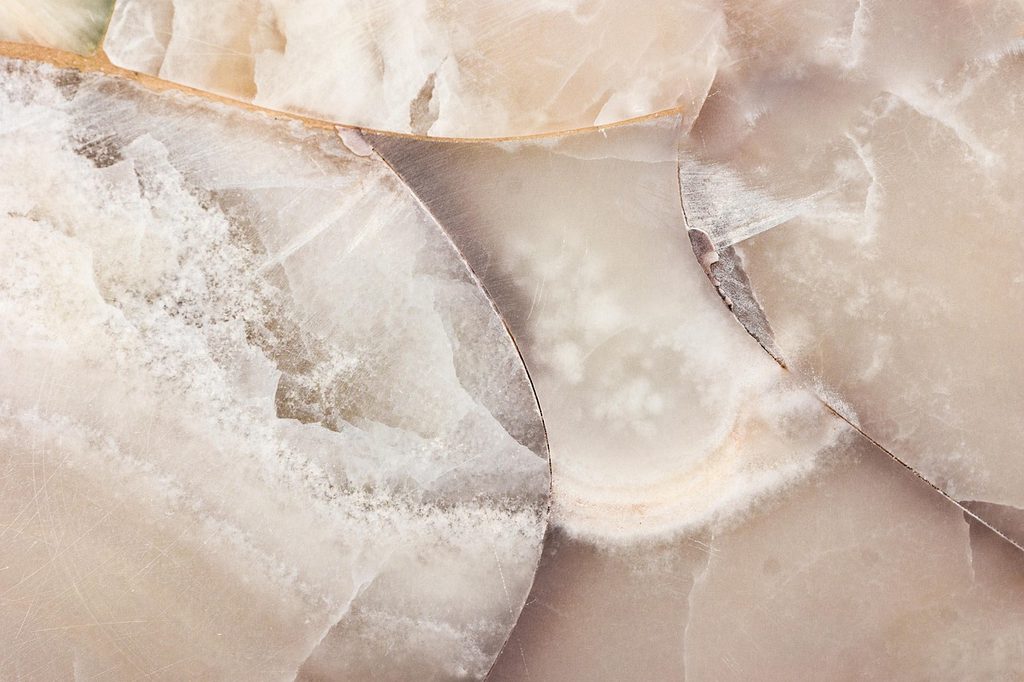
Here is the catch sellers rarely lead with. Carmel Stone Imports explains that a decorated slab has a surface-applied pattern over a pale, uniform body. When an edge chips, it exposes that pale body, and the result is a visible color mismatch. Natural stone carries color through its full thickness, so a chip looks far less obvious.
Repair limits and edge profiles
Repair is where the sources disagree. HomeGuide says chips and cracks can be repaired with color-matched epoxy. Carmel says porcelain chips usually cannot be repaired invisibly, because standard stone repair products cannot match the glazed finish, and Pioneer lists limited repair options as a drawback. Plan as if a chip will stay visible.
Edge choice changes the odds. Carmel says profiles that avoid a sharp right angle, such as a slightly softened edge or a full bullnose, chip least, and it calls mitered joints fragile points during fabrication and after installation. Pioneer says expertise varies widely, and that skilled shops using waterjets and bridge saws reduce the risk.
These are statements from sellers and fabricators with something to sell, so read them as informed warnings, not lab data. The practical answer is the same either way: choose a softened edge, keep heavy cookware away from the corner and ask to see finished porcelain edges from the shop’s earlier work.
Our guide to warm versus sleek kitchen aesthetics helps you decide whether a crisp edge is worth that risk, and minimalist kitchen design shows how a plainer edge can still look deliberate.
Fabrication limits from a manufacturer guide
Overhangs, cutouts and support requirements
One manufacturer’s guide shows how tight the rules can be. ENVI Surfaces’ porcelain fabrication guide, a document dated September 2021, says overhangs, flush-mounted sinks and hobs require 12 millimeter slabs, and that an overhang may be no wider than 6 inches. Other makers’ limits will differ, so treat these numbers as an example, not a code.
The same guide sets a minimum corner radius for cutouts of 5/16 inch in 12 millimeter slabs and 1/4 inch in thinner ones. It also asks for at least 2 inches between a cutout and the slab edge. It says a 12 millimeter slab laid over cabinet bases should be supported every 24 inches, with extra support around the sink.
Handling slabs and planning delivery
It also tells fabricators to handle slabs vertically, never flat, and to use at least four people with a suction frame for 12 millimeter pieces. For L-shaped tops it says to join two rectangles and avoid diagonal joints. Those are shop rules, but they show why a tight layout with many cutouts costs more.
Handling reaches your house, too. ENVI’s guide says a finished top should be moved with purpose-built crates and wooden cross-bars, and held vertically until it goes on the cabinets. Tell the fabricator about narrow stairs, tight doorways and long carries before the quote is final, since access can change how the slab travels.
Planning island seating
The 6-inch overhang is the number to remember if you want seating at an island. Ask the fabricator how they plan to support a deeper overhang, and ask for the maker’s own guide. Our look at kitchen islands that steal the spotlight covers the design side, and our list of kitchen layout mistakes flags common planning errors.
Cutouts, seams and mitered edges
Undermount sink cutouts
An undermount sink is the highest-risk cut. Carmel says it requires sustained cutting of a curved, continuous opening and that the unsupported inner piece must come out without letting the slab flex, so losing support at any point can crack the top. Ask how many porcelain undermount cutouts the shop has done, and ask for references from those jobs.
Seam locations
Seams show. Pioneer says porcelain seams are visible and cannot be matched as evenly as quartz or granite, though large slabs reduce the number of seams. Plan the seam position on the drawings, and tell the fabricator where the sink and cooktop go before they lay out the slab.
Mitered edges and full-body slabs
A mitered edge wraps the pattern over the front to make a slab look thicker. Pioneer says decorated slabs need mitering or careful alignment so the edge looks like stone, while a full-body slab shows the pattern on its cut edge without mitering. The mitered joint is one of the fragile points Carmel names, so the choice is a trade between look and risk.
Open layouts add their own constraints, and our guide to smart kitchen design tips explains how to place cutouts where the work happens.
Heat, stains and daily wear
This is where porcelain earns its place. HomeGuide says it resists heat better than quartz or granite, and that it is non-porous, so stains do not soak in. The same page says porcelain withstands damage most of the time but may crack or chip under excessive force. Pioneer says it never needs sealing, and both pages call it scratch resistant, which suits a busy family kitchen.
Daily care is simple because the surface is non-porous, and your supplier can give the maker’s cleaning advice. A hard surface that resists scratching is still brittle at the edge, so the chip warning applies even after install.
Mind the cabinet base too. ENVI’s guide says a 12 millimeter slab laid over cabinet bases needs support every 24 inches on a level, planar surface. Check the cabinets before the slab arrives.

Choosing porcelain, and who should skip it
Start with the honest question from the title: is it worth it? The answer depends less on the slab than on the shop that cuts it. A porcelain top with a softened edge, a modest overhang and an experienced fabricator can be a fine long-term choice. The same slab in the wrong hands is an expensive risk.
Who will enjoy porcelain countertops
Porcelain suits a household that wants a clean, low-upkeep surface, cooks on high heat and will protect the edges. It suits a layout with a plain edge, few cutouts and a fabricator who can show finished porcelain jobs. It also suits anyone who likes a stone look without natural-stone upkeep.
Who should consider another surface
It is a poor match for a busy family island with a deep overhang, an undermount sink and a crisp mitered corner, all at once. It is also a poor match when the nearest skilled fabricator is far away, since the sources agree that skill drives the result. In those cases a natural stone or a quartz top is the safer bet.
I tell clients to ask to hold an offcut and then to look at a chipped sample edge, not only a polished showroom face. Our look at kitchen design trends shows where large-format surfaces are heading, and our ideas for open-concept kitchens show how a continuous surface can read in a big room.
FAQ
Sealing needs for porcelain
None, according to the sources. HomeGuide calls porcelain non-porous and says it needs no sealing, and Pioneer says it is never sealed. Grout lines in a tile backsplash are a different matter.
Questions for a fabricator
Carmel Stone Imports suggests asking which edge profile they specify, how many porcelain jobs they have completed and whether their diamond tooling is rated for porcelain. Ask also how many undermount cutouts they have done in porcelain, and why they chose the thickness.
Hot pans on porcelain
HomeGuide says porcelain is more heat resistant than quartz or granite. That does not mean any pan, any time, so ask your supplier for the maker’s guidance and use a trivet for large, very hot cookware.
Your next step is a conversation
Still weighing porcelain against stone? Book a free discovery call. It is an honest conversation about your home, with no sales pitch and no obligation. Ask for our free “Planning your remodel budget” guide while you are there, and use the contact page to start. You can also see how a project runs, from first sketch to final walkthrough, on the our process page.