
Soapstone countertops cost about $60 to $130 per square foot installed, according to two published estimates from 2024 and 2026. The price is not the surprise. The surprise is a soft stone that darkens with use and records every nick, so the real question is whether you like a surface with a history.
This guide covers the cost ranges, the oiling decision, how scratches behave and who should pick something else. No independent dataset prices stone in Marin, Sonoma or Napa, so every figure here is national or from one vendor, and the text says so. If you are still sorting through surfaces, our guide to kitchen countertop materials lines up the main options side by side.
Soapstone basics and what the stone is
Soapstone countertops start as a quarried natural stone rich in talc, the softest common mineral. HomeGuide’s cost page says architectural soapstone, the grade suited to counters, runs 50 to 75 percent talc, while art-grade stone has 80 percent or more. More talc means a softer stone that carves easily and wears faster.
Vermont Soapstone, a quarry and fabricator, says the stone is non-porous, so liquids do not soak in. Fresh from the quarry it is light gray. The deep charcoal people associate with soapstone arrives later, as the stone is exposed to water, grease and oils.
Sources disagree on how hard the stone is. SlabWise lists a Mohs range of 3 to 5, while HomeGuide says only that it is not as hard as quartz or granite. Because the numbers differ, this guide uses none and focuses on how the stone behaves in a kitchen, which the care pages describe consistently.
For the wider picture, our rundown of the best materials for a kitchen remodel shows where a natural stone sits among cabinets, floors and surface choices.
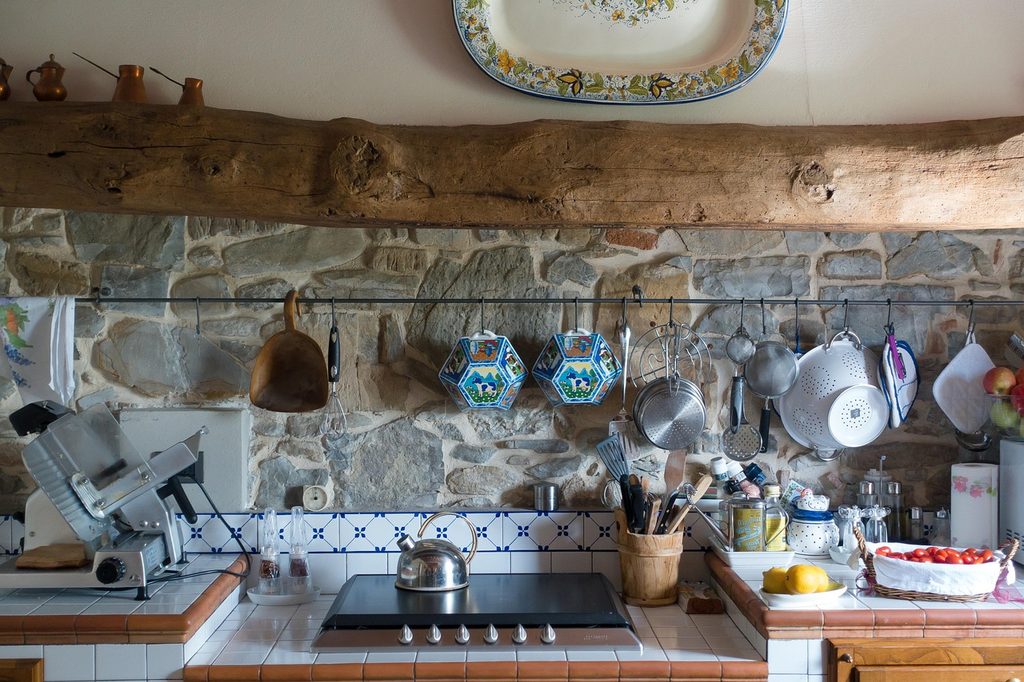
Soapstone countertop cost from two published estimates
Two published estimates agree on the overall shape of the price and differ at the edges. The table shows each one with its date.
| Source | Date | Installed cost per square foot | Typical kitchen |
|---|---|---|---|
| HomeGuide | Updated January 2024 | $60 to $130 | $1,800 to $5,200 for 30 to 40 square feet |
| SlabWise | Published March 2026 | $70 to $120, national average $80 to $100 | $2,800 to $4,800 for about 40 square feet |
HomeGuide splits its range into slab material at $50 to $90 per square foot and fabrication and installation at $10 to $40. SlabWise puts material alone at $35 to $70. Both are national estimates, and this guide found no independent county-level data for Marin, Sonoma or Napa.
SlabWise does give a West Coast range of $90 to $120 per square foot, citing limited supply and long shipping distances. That is one vendor’s claim, so read it as a reason to budget high, not a measurement. Projects Within Reach has not published stone prices, and this guide does not invent any.
To see where a counter sits in a whole-kitchen budget, read our post on planning a modern kitchen remodel without overspending. Our tips to help you save when remodeling show where other lines can give.
Costs beyond the slab price
Edge profiles and sink cutouts
Edges, cutouts and structure add to the bill. HomeGuide lists edge profiles at $10 to $30 per linear foot, with straight and eased edges free, bevels and bullnoses at $10 to $15, and ogee or mitered edges at $20 to $25. SlabWise puts a standard undermount cutout at $150 to $300 and warns that detailed profiles such as an ogee chip more easily.
Stone origin and cabinet support
Origin matters too. SlabWise says Brazilian soapstone is generally the most affordable and available, and that domestic stone from Vermont or Virginia carries a 20 to 40 percent premium over imported material. If a fabricator quotes a very low number, ask where the slab was quarried.
Weight is a hidden line. SlabWise says soapstone weighs about 18 pounds per square foot at 3 centimeters, similar to granite, and HomeGuide notes that lower cabinets may need leveling to carry it. A sound cabinet base is cheaper to confirm before demolition than to fix after.
HomeGuide adds that cutouts may cost less than in harder stones because soapstone cuts easily. The saving is small next to the slab itself. Our explainer on working with a kitchen and bath designer covers who checks these details before they become change orders.
Patina and the oiling decision
What mineral oil does
Here is the question most soapstone buyers ask late: oil it or not? The sources agree that mineral oil does not seal or protect the stone. M Teixeira Soapstone says the oil is only speeding up the natural darkening, and Vermont Soapstone says it keeps the oxidation uniform across the surface.
Leaving soapstone unoiled
If you do nothing, the stone still darkens. Vermont Soapstone says the charcoal color comes from exposure to water, grease and oils, so a working kitchen gets there without help, but unevenly. Busy areas near the sink and the stove darken first, and quiet corners stay pale for longer.
Oiling schedules and the work involved
If you oil, the schedule is a choice. Vermont Soapstone says most people oil about once a month for a year, some finish in a couple of months and some keep going for years. SlabWise suggests a heavier start, every one to two weeks in the first month. M Teixeira says the stone holds each coat longer and stays permanently dark by about the sixth to eighth month.
Remodelista’s 2019 first-hand essay is the honest counterweight. Its author found that the parts used most, around the sink and the island perimeter, faded faster than the rest, and that oiling meant clearing the counters, wiping and waiting overnight. The author also reported an oily residue for weeks, and after a couple of years stopped oiling.
I tell clients to decide before installation whether they want a dark, even look or a lived-in one, because the first choice is a chore and the second is a mood. Our guide to warm versus sleek kitchen aesthetics can help you place that decision, and the piece on layered kitchen lighting shows how light changes the way a dark surface reads.
Scratches, dents and the honest wear pattern
How scratches and dents develop
Soapstone scratches, and every source says so. M Teixeira Soapstone calls it more prone to scratches than granite or marble. Vermont Soapstone adds that the stone tends to dent rather than chip or crack, which is gentler than a chipped edge but still visible.
Repairing surface marks
The fix is easy but not invisible. Early marks are often displaced oil, and Vermont Soapstone says rubbing the spot with a thumb or adding a little oil removes them. SlabWise says moderate scratches sand out with 220-grit paper, then 320, and deep gouges start at 120 grit before moving up, always finishing with oil.
Everyday wear and patina
Remodelista’s author lists the everyday triggers: a dropped can of beans leaves a nick, a dropped dinner knife does the same and sliding a glass or vase can scratch. The author would not slice an apple on it. HomeGuide agrees that it scratches mainly under excessive force or when used as a cutting board.
So the honest summary is that soapstone heals easily and marks easily. A household that sees a scratch as a chore will be unhappy, and a household that sees it as character will not. Our overview of top kitchen cabinet trends helps if you are choosing cabinet finishes that forgive the same kind of wear.
Heat, stains and acids
Here soapstone countertops earn their reputation. Vermont Soapstone calls it impervious to chemicals, acids and heat, and Remodelista’s author sets hot pots on the counter without a second thought. Because the stone is non-porous, red wine, lemon and tomato sauce do not etch it the way they etch marble.
The caution is about what the claim means. These are statements from a quarry and a first-hand owner, not a lab test, so set a hot pan down with the same common sense you would use on any surface. Remodelista also says soapstone does not need a sealer, which saves a recurring step compared with some other stones.
Daily cleaning is plain. SlabWise says warm water and mild dish soap, and Vermont Soapstone says soap and water usually works, with household cleansers acceptable after oiling. Skip anything abrasive on a soft surface that you plan to keep looking even.
Fabrication, weight and seams
Planning seam locations
Ask about seams early, because soapstone countertops rarely come in one piece. Remodelista says soapstone slabs are hard to find in long lengths, so most counters have a seam, and its author placed the seam in the middle of the sink to keep it small. A seam location is a design decision, so settle it on the drawings, not on install day.
Fabrication dust and slab information
Fabrication also raises a dust question. OSHA’s publication on silica during countertop fabrication lists the crystalline silica content of soapstone as “varies”, while quartzite is at least 95 percent and marble under 5 percent. It tells shops to verify the content in the safety data sheet and to use wet cutting and local exhaust ventilation.
That means a fabricator should be able to tell you what is in your slab and how the shop controls dust. A clear answer is a good sign. A vague one is worth noting, whatever the stone.
Layout choices that suit soapstone countertops are simple ones. A clean run with few seams, a standard edge and no fussy profile keeps cost and chip risk down. Our guide to minimalist kitchen design shows how restraint pairs with a stone that already has plenty of character.
Soapstone fit and the households that should pass
Who will enjoy soapstone
Soapstone countertops suit cooks who use their kitchens hard, want heat and acid tolerance and enjoy a surface that changes. It fits a household that likes patina in furniture, leather and wood. It also suits anyone who would rather sand out a mark on a Sunday than replace a stone.
Who should consider a harder stone
It is a poor match for a household that wants a flawless surface, a counter that doubles as a cutting board, or a kitchen that must look the same in ten years as at install. Those buyers usually do better with a harder stone, and our upcoming comparisons of quartz, quartzite and granite will cover them.
Budget and trying a sample
Budget matters here as well. Remodelista says soapstone countertops cost less than marble but more than granite and engineered stone. If you spend that premium, spend it on a slab you love, not on an edge profile that chips.
I tell clients to live with a sample for a week before committing, with oil on half and bare stone on the other half, and to scratch it on purpose. Our look at kitchen design trends shows where natural surfaces are heading, and the guide to eco-friendly kitchen renovations covers lower-impact choices.
FAQ
Cutting directly on soapstone
Not if you want soapstone countertops to stay smooth. HomeGuide says soapstone scratches under excessive force or when used as a cutting board, and Remodelista’s author avoids slicing on it. A separate board keeps the knife edge off the stone.
Wax in place of mineral oil
Vermont Soapstone sells a wax alternative from The Real Milk Paint Company. The company says customers gave positive feedback, but it remains a mineral-oil advocate and wants a few more years of field testing. Ask your fabricator which product they stand behind.
Soapstone near food
Vermont Soapstone says the US Food and Drug Administration recognizes soapstone as a suitable surface for contact with food. That is the company’s statement, and this guide did not locate the FDA listing itself. Wash the surface with soap and water as you would any prep area.
Your next step is a conversation
Still weighing soapstone countertops against a harder stone? Book a free discovery call. It is an honest conversation about your home, with no sales pitch and no obligation. Ask for our free “Planning your remodel budget” guide while you are there, and use the contact page to start. You can also see how a project runs, from first sketch to final walkthrough, on the our process page.