
A kitchen remodel budget is useful only when it includes the whole project, not just cabinets and counters. In 2025, the Cost vs. Value report modeled a San Francisco minor kitchen remodel at $31,804, a midrange major remodel at $97,667 and an upscale major remodel at $192,231. A 2026 Bay Area contractor guide sets different planning ranges by scope. Those numbers are reference points, not a quote for your home.
Use this step-by-step method to set a spending ceiling, protect a reserve for surprises and compare proposals that cover the same kitchen. For a deeper local cost breakdown, see our guide to how much a kitchen remodel costs in the Bay Area.

Start with scope-based cost ranges
A budget should follow the work you plan to do. The 2026 Aziz guide gives these broad Bay Area planning ranges. The company sells remodeling services, so treat its figures as a contractor’s estimate of typical scope bands, not independent regional averages.
| Project scope | 2026 Bay Area planning range | Typical scope to confirm |
|---|---|---|
| Cosmetic refresh | $20,000 to $40,000 | Keep the layout; update select surfaces, fixtures or finishes |
| Entry-level full remodel | $40,000 to $70,000 | Replace major components while keeping a similar footprint |
| Midrange remodel | $70,000 to $120,000 | Often includes semi-custom cabinets and updated systems |
| High-end remodel | $120,000 to $200,000 | Custom finishes, premium appliances or more construction |
| Luxury or custom kitchen | $200,000 to $300,000+ | Extensive customization, structural work or high-end materials |
National spending data offers another point of comparison. The 2026 Houzz Kitchen Trends Study reports median spending of $35,000 for major remodels in kitchens under 200 square feet and $55,000 for larger kitchens, based on homeowners’ reported projects. These are national medians; they do not price a Bay Area job.
The different figures are not a contradiction. Each source defines “major” and “midrange” differently, and contractor proposals can include different allowances, labor and exclusions. Use a range to choose a likely scope, then get current itemized bids.
Set an all-in ceiling before choosing finishes
Write down the most you can spend across the entire project. Keep the all-in ceiling separate from the amount you want to spend on construction. The total may also need to cover design, engineering, permit fees, appliances bought separately, temporary cooking equipment, storage and meals away from home.
If the limit is firm, subtract known non-construction costs first. Then protect a contingency reserve from the remaining construction amount. Do not treat the reserve as money available for upgrades; it is for conditions you could not reasonably confirm before opening walls.
Use a contingency formula that fits your cap
Aziz suggests a contingency allowance of 15% or more for a midrange project. That is a contractor’s planning recommendation, not a code requirement or guarantee. For an older home or a scope with more unknowns, ask your designer and contractor whether a larger reserve is appropriate.
Here is the math if $100,000 is available for construction plus a 15% reserve:
– Construction target: $100,000 ÷ 1.15 = about $87,000 – Protected reserve: about $13,000 – Total: about $100,000
If your $100,000 ceiling must also cover design or temporary living costs, subtract those amounts before using the formula. This keeps the project plan honest before bids arrive.
Build the budget in eight steps
1. Describe the job in plain language
Write one paragraph about what should change and what should stay. Note whether cabinets remain, the layout moves, walls open, appliances change and plumbing or electrical work is expected. A clear scope makes it easier to tell whether a quote is for a refresh or a full remodel.
2. Separate must-haves from options
Put each decision in one of three groups: required for function or safety, wanted if the budget allows, or easy to defer. Decide the cabinet tier, appliance package and countertop level before shopping for decorative details. For advice on where to save and where to spend, read our kitchen remodel budget guide.
3. List every budget line
Include demolition and disposal, cabinets and hardware, countertops, appliances, flooring, backsplash, lighting, plumbing, electrical, labor, permits, design and any structural or engineering work. Add installation and delivery for products you buy yourself. Ask each vendor whether tax, haul-away, protection and cleanup are included.
4. Make allowances specific
An allowance is a placeholder for a selection not yet finalized. “Countertops: $5,000” is hard to compare if one contractor assumes laminate and another assumes natural stone. Ask for the material, quantity, finish, installation and amount behind every allowance, then replace placeholders with actual selections as early as possible.
5. Price the schedule outside the bid
If the kitchen will be unusable, plan for a temporary sink, microwave or hot plate, storage and extra meals. Keep these costs visible even if they are not part of the contractor’s scope. Our guide to the kitchen remodel timeline can help you estimate how long you may need a temporary setup.
6. Get proposals against the same plan
Ask two or three qualified local contractors to price the same drawings, selection list and scope. Request line items, start and completion assumptions, permit responsibility, exclusions, payment schedule and change-order process. A low total can reflect missing work rather than a better price.
7. Check permits before ordering
Permit requirements depend on the address and scope. Before demolition or ordering, ask the building department whether the plan needs permits, plan review or inspections, and who will obtain them. Marin County’s permit guidance distinguishes simpler projects from work requiring plans up front; check the authority for your city or county.
8. Freeze decisions before work begins
Finalize cabinet dimensions, appliance models, countertop material, sink, faucet, tile and lighting before the related work is scheduled. If something changes, get the revised cost and time in a written change order before approving it. California’s Contractors State License Board says home improvement contracts over $500 must be in writing and changes to them must also be written.
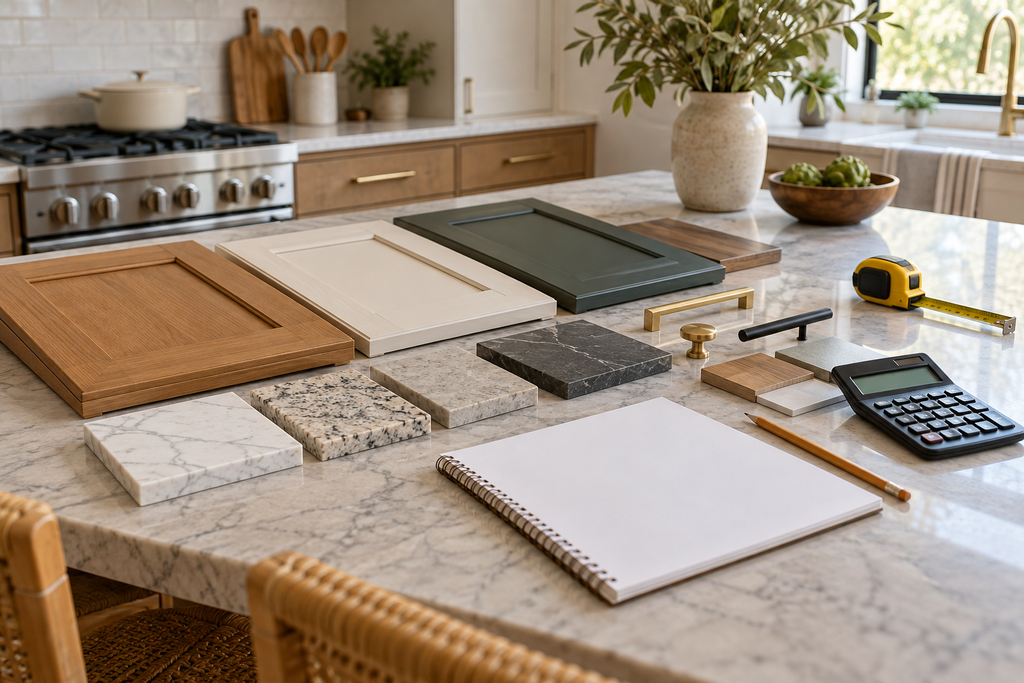
Use this worksheet to compare the numbers
Fill this in for each proposal. Keep your own estimate, each contractor’s amount and any exclusion side by side.
| Budget line | Your planning amount | Contractor A | Contractor B | Confirm what is included |
|---|---|---|---|---|
| Design and engineering | $_____ | $_____ | $_____ | Drawings, measurements, structural review |
| Demolition and disposal | $_____ | $_____ | $_____ | Protection, haul-away, hidden-condition process |
| Cabinets and hardware | $_____ | $_____ | $_____ | Box type, finish, storage, installation |
| Countertops and backsplash | $_____ | $_____ | $_____ | Material, square footage, cutouts, seams |
| Appliances and connections | $_____ | $_____ | $_____ | Delivery, installation, electrical or gas work |
| Plumbing and electrical | $_____ | $_____ | $_____ | Fixture moves, new circuits, inspections |
| Flooring, lighting and finishes | $_____ | $_____ | $_____ | Materials, labor, fixtures |
| Permits and inspections | $_____ | $_____ | $_____ | Fees, who applies, required inspections |
| Temporary kitchen and storage | $_____ | $_____ | $_____ | Costs outside the construction contract |
| Contingency reserve | $_____ | N/A | N/A | Kept separate from the contract amount |
A blank or vague line is a follow-up question. Ask the contractor to mark whether the item is included, excluded or an allowance, and to name the party responsible for it.

Read the contract before you pay a deposit
The California Contractors State License Board says the down payment for a home improvement job cannot exceed $1,000 or 10% of the contract price, whichever is less. The contract also needs a detailed written payment schedule; progress payments cannot exceed the value of work performed, aside from the down payment. Special-order materials do not create an exception to the down-payment limit.
Check the contractor’s license, the scope, product specifications, start and completion dates, permit responsibility, cleanup, warranty and change-order process. The CSLB also requires a written change order, signed before the change, when price or scope changes. Keep the signed contract and revisions with your budget worksheet.
If the proposal is over budget, change scope deliberately
Start by asking which line items drive the gap. Then decide whether to phase the work, keep sound cabinets, simplify the finish level, postpone an appliance upgrade or preserve the current layout. Compare the revised proposal with the original so you can see what each cut saves and what function it gives up.
Avoid cutting the contingency first to make the proposal appear to fit. If the project only works when every hidden condition goes perfectly, reduce the scope or reset the ceiling before signing. A clear decision now is easier to manage than a series of rushed change orders later.
FAQ
How much should I set aside for a kitchen remodel?
Start with a scope-specific range, then price your actual selections and work. The Aziz 2026 guide places Bay Area cosmetic refreshes at $20,000 to $40,000 and midrange remodels at $70,000 to $120,000, but it labels those figures as planning ranges. Add separately budgeted soft costs and a protected contingency.
Is a kitchen remodel priced by square foot?
Square-foot figures can help compare projects with similar scope, but they do not price your cabinets, systems, labor or layout changes. A small kitchen can still require the same design, demolition and trade mobilization as a larger one. Ask for a scope-based proposal rather than multiplying one generic rate by room area.
What is a reasonable contingency?
There is no one required percentage for every kitchen. Aziz recommends 15% or more as a planning allowance for a midrange project. Use it as a starting point, and ask your project team to adjust for the home’s age, visible conditions and what the estimate cannot verify.
How many kitchen remodel bids should I get?
Two or three itemized bids can help you compare scope and price. Give each contractor the same drawings and selection assumptions, verify the license and check references. If the scopes differ, ask for revisions before comparing totals.
Your next step is a conversation
A useful budget begins with your household’s priorities, a defined scope and a number you can sustain. If you want help turning those pieces into a plan, book a free discovery call through our contact page. Bring your target ceiling, must-haves and any proposals in hand so you can talk through what belongs in the first phase.