
How much does a kitchen remodel cost in the Bay Area? The honest answer is a spread. The most useful independent benchmark, the 2025 Cost vs. Value report, prices a midrange minor kitchen remodel in San Francisco at $31,804, a midrange major remodel at $97,667, and an upscale one at $192,231. Contractor guides for the region vary widely.
This guide found no independent dataset that prices Marin, Sonoma or Napa on their own, so it uses the San Francisco metro as the nearest benchmark and says so each time.
Budget conversations belong at the beginning of a project. Published estimates disagree with each other, and a budget you can defend starts from the scope, not from a headline number. If you want the planning side first, our earlier piece on how to plan a modern kitchen remodel without overspending pairs well with this one.
The short answer on how much a kitchen remodel costs in Marin, Sonoma and Napa
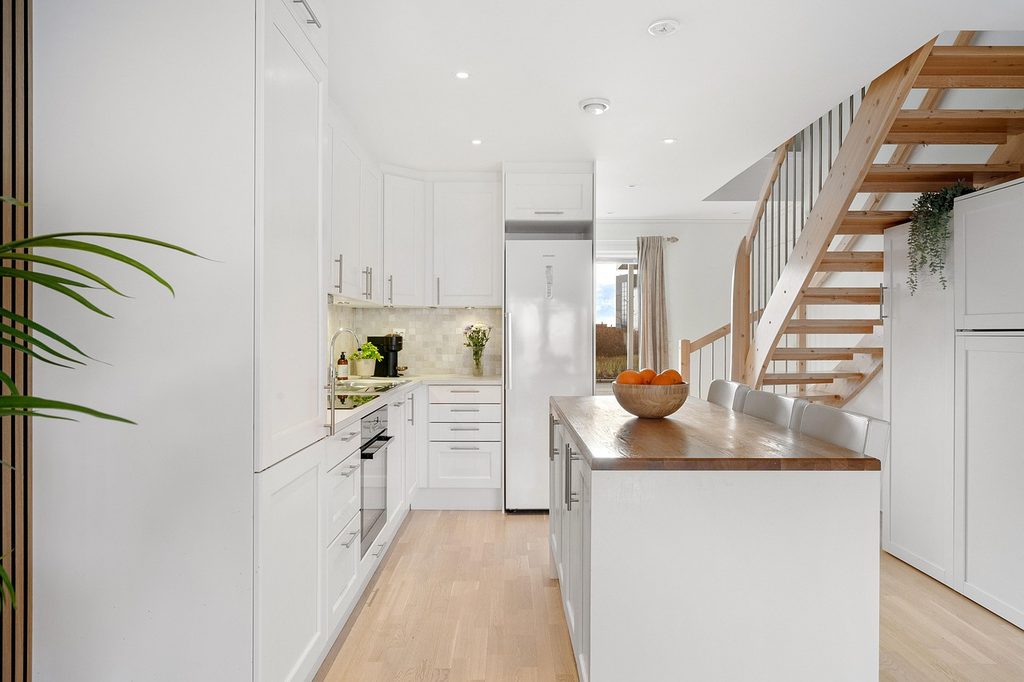
Compare published ranges by project scope
Most kitchen remodel budgets fall into three jobs: replace the surfaces, replace the whole kitchen in the same footprint, or change the layout and buy custom. The table sets the closest published match for each. The rows are this guide’s pairing of sources whose tier definitions differ, so read them as rough bands.
| Scope | Cost vs. Value, San Francisco, 2025 | Contractor planning range, Bay Area, 2026 |
|---|---|---|
| Fronts, counters and appliances replaced, layout unchanged | $31,804 (minor, midrange) | $20,000 to $40,000 (cosmetic refresh) |
| New semi-custom cabinets and appliances | $97,667 (major, midrange) | $70,000 to $120,000 (mid-range) |
| Custom cabinets, stone and professional appliances | $192,231 (major, upscale) | $120,000 to $200,000 (high-end) |
The Cost vs. Value figures come from the 2025 San Francisco report, which lists the Pacific region at $29,728, $86,480 and $171,950 for the same three jobs. The contractor ranges come from a 2026 Bay Area guide by Aziz Construction, which calls them planning ranges. Across the country, the 2026 Houzz Kitchen Trends Study of 1,780 homeowners puts the median major remodel at $55,000 and the median minor remodel at $20,000.
Projects Within Reach has not published its own prices, and this guide does not invent them. If your quote lands outside these bands, ask what the scope of work includes. Our guide to tips to help you save when remodeling covers the first places to look.
The reasons published kitchen remodel cost numbers disagree
Compare the modeled scope with contractor ranges
The gap between sources comes from scope definitions. Cost vs. Value prices a model project: a 200-square-foot kitchen with 30 linear feet of cabinets. Its minor remodel keeps the cabinet boxes, replaces the doors and drawer fronts, swaps the range and refrigerator, and replaces laminate counters. Its midrange major remodel installs semi-custom wood cabinets and a 3-by-5-foot island, but still uses laminate countertops.
That is a real kitchen. It is not the stone-and-custom kitchen many homeowners picture.
Contractor guides stretch the same words further. Aziz Construction lists a mid-range Bay Area kitchen at $70,000 to $120,000. A Clever Design and Remodeling guide, updated in August 2026, lists a Bay Area mid-range kitchen at $30,000 to $60,000. Both call the job mid-range. Both cannot describe the same kitchen, so treat any price range without a scope list as a guess.
Treat permit values as fee inputs, not project budgets
Permit data adds a third trap. Renology, summarizing San Francisco building-department records, reports a median declared value of $25,000 across 908 kitchen permits for houses and duplexes filed since September 2024. It also notes that the city’s own cost schedule says declared values are no guide to actual construction cost. A permit value is a fee input. Do not budget from it.
A kitchen remodel cost breakdown by line
See how each budget line adds up
The line items show where the money goes and which decisions you control. The table below is the mid-range breakdown from the same Aziz guide, dated August 2026.
| Budget line | Mid-range Bay Area planning range |
|---|---|
| Cabinets and hardware | $12,000 to $25,000 |
| Countertops | $4,000 to $10,000 |
| Appliances | $5,000 to $15,000 |
| General labor | $10,000 to $20,000 |
| Plumbing | $3,000 to $7,000 |
| Electrical | $3,000 to $6,000 |
| Flooring | $3,000 to $8,000 |
| Backsplash and tile | $2,000 to $6,000 |
| Lighting | $1,500 to $4,000 |
| Permits and inspections | $1,500 to $4,000 |
| Demolition and disposal | $1,500 to $3,500 |
Add the low ends and you get $46,500. Add the high ends and you get $108,500. That is this guide’s arithmetic, and it sits below the source’s $70,000 to $120,000 headline range. The source does not itemize the difference, so ask any contractor who quotes a mid-range number to show the line items behind it.
The National Kitchen & Bath Association’s guide for an average remodel, as reproduced by a dealer, splits a budget by share instead of dollars. Cabinetry and hardware take 29 percent, installation 17, appliances and ventilation 14, countertops 10, flooring 7, lighting 5, walls and ceilings 5, design fees 4, doors and windows 4, and faucets and plumbing 4. It is an older, undated guide, so use it for the order of the lines, since the percentages may have shifted.
Cabinets set the floor
Cabinets are the largest single line in both sources, which makes the cabinet tier the first decision to settle. NKBA notes that the cost of a basic cabinet box can double once you add built-in storage sections, an upgraded finish or raised-panel door, and better hinges and hardware. It also says frameless cabinets tend to cost more than face-frame cabinets and take longer to install.
That is why the minor model in Cost vs. Value keeps the boxes and replaces only the fronts. If your existing boxes are sound and the layout works, replacing the fronts is the biggest lever on this line. If the boxes are failing, or the drawers are the wrong size for how you cook, new semi-custom cabinets earn their money. Our look at kitchen cabinet trends, finishes and storage solutions shows what the finish choices look like before you price them.
Counters, appliances and lighting
Aziz puts mid-range countertops at $4,000 to $10,000 and appliances at $5,000 to $15,000. The Cost vs. Value midrange model uses laminate counters. Its upscale model moves to stone countertops with an imported tile backsplash, a built-in refrigerator, a commercial-grade cooktop and a wall oven. The distance between those two models comes from materials and appliances. Our countertop materials guide compares the options, and the post on kitchen remodel materials covers flooring and backsplash.
Check the appliance line for what the price leaves out. Aziz warns that a purchase price may leave out delivery, installation, electrical changes, gas and plumbing connections, cabinet modifications, and removal of the old appliances. Two quotes for the same range can differ by far more than the sticker price suggests.
Lighting is a small line with a big effect on how the room works. Our explainer on layered kitchen lighting shows why a lighting budget of $1,500 to $4,000 beats treating light as an afterthought.
Labor, demolition and disposal
The Aziz mid-range table puts general labor at $10,000 to $20,000, with plumbing and electrical on their own lines and demolition and disposal at $1,500 to $3,500. Cheaper materials do not remove trades from the job, because the same plumber, electrician, tile setter and inspector still show up.
This is where a licensed general contractor earns the fee. Someone has to sequence the plumber, the electrician, the tile setter and the countertop fabricator so none of them stands in a half-finished room waiting for another.
Layout changes are where the number jumps
Price the existing plan against any proposed moves
Keeping the existing layout is the most reliable way to hold a budget. Aziz explains why: moving a sink can mean new supply and drain lines, moving a range can mean gas and electrical work, and removing a wall can mean structural engineering and added permits. An island can bring outlets, lighting and sometimes plumbing with it.
The Cost vs. Value models show the same pattern. The minor model changes surfaces and fixtures, and the major models change cabinetry across the room.
Whether to move things is a design question before it is a cost question. Our list of kitchen layout mistakes designers avoid can show you whether the layout you have is a real problem or only a dated one. If an island is on your wish list, read the piece on kitchen islands before you commit floor space to one.
A kitchen that works on a Tuesday morning with the sink where it is costs less than one redrawn to please a photograph. When the existing plan fails, such as a refrigerator that blocks the walkway or no counter beside the range, moving a fixture is money well spent. Price both versions of the plan and compare.
Permits and inspections belong in the budget
Confirm the fee and review path for your address
Aziz lists permits and inspections at $1,500 to $4,000 in its mid-range table, and fees vary by scope and city. More useful than the fee is knowing which review path your job takes, because it changes your schedule as well as your cost.
Marin County’s Community Development Agency says a non-structural kitchen or bathroom remodel of 400 square feet or less can use its online minor improvement permit, with plans reviewed at the job site. Larger jobs need plans reviewed up front, which the county says takes six to eight weeks. In unincorporated Sonoma County, Permit Sonoma’s exemption list covers finish work such as cabinets, counter tops and tiling, but rearranging plumbing or replacing concealed pipes requires a permit. Its page also says to assume a permit is needed if your work is not on the list.
Those two pages describe county rules, and rules vary by city, so confirm your scope with the building department that covers your address. This guide could not confirm a current Napa permit page, so it makes no Napa claim. Ask the Napa building division before you plan your schedule.
Contingency and the surprises behind the walls
Reserve for hidden conditions and temporary cooking
The Aziz table lists a contingency line of 15 percent or more of the project budget. That is a number few homeowners put in their spreadsheet, and it is the one that keeps a surprise from becoming a crisis. Walls hide things. A drain may sit where the new island wants to go, or a floor may need repair once the old cabinets come out.
Other costs never appear in the quote at all. If the kitchen is out of service for weeks, Aziz points out, you may spend more on temporary cooking and eating out. Plan a hot plate, a coffee station and a rinsing sink somewhere that is not the bathroom. Our guide on how to maximize kitchen space and boost functionality helps here, because the same thinking about what you use daily applies to a temporary setup.
Treat contingency as money you hope to give back. If the walls open and nothing is wrong, you keep it, or it goes toward a tile upgrade you wanted anyway.
Comparing bids and protecting your money
Compare written scope, allowances and exclusions
Two bids can differ by tens of thousands of dollars and describe different kitchens. Line them up by scope of work, allowances, exclusions, permits, who orders the cabinets, and how change orders are priced. Ask for an itemized proposal, and do not compare any bid that is a single number.
California rules protect you on one point worth knowing. The Contractors State License Board says a home improvement down payment cannot exceed $1,000 or 10 percent of the contract price, whichever is less. NKBA’s budget guidance adds that you should arrange a defined payment schedule and never pay in full before your goods are delivered.
This is also where a designer changes the math. A designer who draws the plan before the bids arrive means every contractor prices the same kitchen, and someone on your side reads the bids against the drawings. Our piece on working with a kitchen and bath designer explains the roles in more detail. At Projects Within Reach, the design work and the advocacy during construction are Jenn’s, and the contractor is hired as a separate step.
I tell clients to settle the cabinet tier and the layout before they collect a single bid, because everything else follows from those two decisions.
Spending and holding back
Spend on features you use every day
Spend on what you touch every day: drawer depth, counter space beside the range and sink, task lighting you can work under, and a dishwasher that fits your dishes. NKBA’s planning guidelines recommend 1,700 inches of total shelf frontage and drawer frontage for a medium kitchen of 151 to 350 square feet. That gives you a test of whether a design stores what you own.
Hold back on upgrades with little daily value
Hold back on things that look expensive and perform the same as cheaper versions. Imported tile on a wall that never gets wet, a second oven you will use twice a year, and custom millwork in a room where good semi-custom cabinets already fit are common examples. Keep sound cabinet boxes when you can, which is the lever the Cost vs. Value minor model pulls.
Our guide to smart kitchen design lists the features that pay back in daily use. Honest budgeting means saying no to some of them.
Turning the benchmark into your number
Adjust the benchmark to your kitchen
Start with the job’s scope, then the benchmark, then a contingency cushion. If your job matches the midrange major model, the San Francisco benchmark of $97,667 plus a 15 percent contingency comes to about $112,300. For a surfaces-and-fronts refresh, $31,804 plus the same contingency is about $36,600. These are model costs for a 200-square-foot kitchen. Your quote will land elsewhere.
Then adjust for what your kitchen is not. A smaller kitchen costs less, and Houzz reports a national median of $46,000 for a major remodel of a smaller kitchen against $75,000 for a larger one. A bigger or older house, stone counters and premium appliances move you up the table. A local quote that undercuts every number on this page deserves a careful read of what it leaves out.
FAQ
Kitchen remodel cost per square foot
The Cost vs. Value models are all 200 square feet, so dividing gives about $159, $488 and $961 per square foot for the minor, midrange major and upscale major San Francisco figures. That spread is why a single price per square foot is a poor planning tool. Cabinet tier, counters and appliances move the number far more than floor area does.
Resale return on a kitchen remodel
The 2025 Cost vs. Value report estimates that a midrange minor kitchen remodel in San Francisco recouped 112.4 percent of its cost at resale, the midrange major remodel 48.5 percent, and the upscale major remodel 32.1 percent. These are modeled estimates, and your house may return less or more. A kitchen you cook in every day also pays back in daily use, which no resale table counts.
Lead times that affect your start date
Aziz lists material selection and ordering at three to 12 weeks or more, and Marin County says plan review for larger remodels takes six to eight weeks. Order timing and permit timing run side by side, so the longer of the two sets your start. Ask your contractor for written dates for design, permit review, ordering and construction.
Your next step is a conversation
Bring your scope and questions
Still asking how much a kitchen remodel costs in your own house? Book a free discovery call. It is an honest conversation about your home, with no sales pitch and no obligation. Ask for our free “Planning your remodel budget” guide while you are there, and use the contact page to start. You can also see how a project runs, from first sketch to final walkthrough, on the our process page.