
Shaker cabinets are a five-piece door with a flat panel set back inside a plain frame, and the one choice that changes how they look is rail width. A classic frame runs about 2 to 2.25 inches wide, while a slim version drops to roughly 1 to 1.75 inches. The style lasts because of how the door is built, and it can still look dated if the proportions or finish are wrong.
This guide covers the door construction, a width comparison, the one failure that shows up on painted doors, and the choices that make a kitchen look current. It found no independent price data for Marin, Sonoma or Napa, so the cost section names what moves the number and cites published figures with their source. For the wider picture of finishes and storage, our kitchen cabinet trends guide is a good companion.
Shaker cabinets start as a five-piece door
The name comes from the Shakers, who the Metropolitan Museum of Art says first came to America from England in 1774. The Met describes their guiding principles as honesty, utility and simplicity. The National Park Service adds that the style is marked by clean lines and a lack of ornament, and that built-in cupboards and drawers were used extensively.
A modern Shaker cabinet door borrows that restraint. Two vertical stiles and two horizontal rails form the frame, and a flat center panel sits recessed inside it. Nothing is carved and nothing is raised, so the door has one shadow line where the frame meets the panel.
The Met notes that most Shaker pieces were originally painted or stained, in blues, greens, reds and yellows. So a green or blue painted kitchen is closer to the source than the white that dominates catalogs. Our warm versus sleek aesthetics guide can help you decide which direction your finish should take.
Because the shape is so plain, it works in traditional and contemporary rooms. Fabuwood, a cabinet manufacturer, calls it versatile for exactly that reason. The same plainness is why proportion matters so much, since there is no ornament to hide behind.
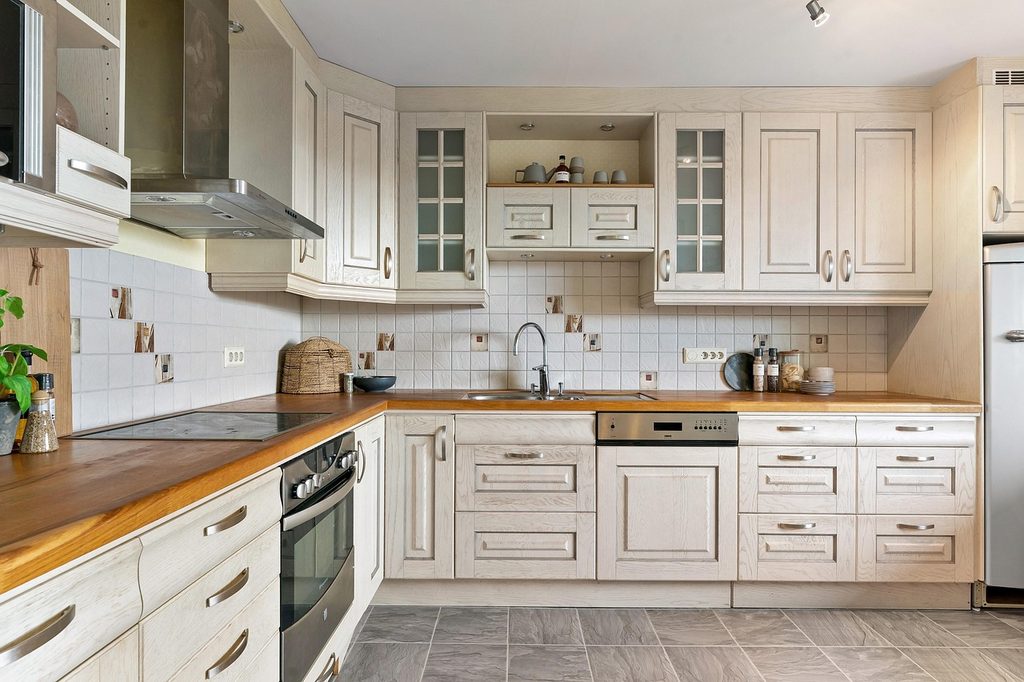
Rail width sets the look
Nobody warns you that “Shaker” covers a wide range of frame widths. Cabinet Now, a door supplier, lists a classic Shaker at 2 to 2.25 inches and a wide-rail version at 3 inches. South Florida Kitchen & Bath Design, a designer, puts traditional frames at 2 to 2.5 inches and slim Shaker at 1 to 1.75 inches.
The table pulls the published ranges together. Treat the numbers as supplier descriptions, since no standard defines them, and ask for the actual measurement on any quote.
| Style | Frame width | Source | How it reads |
|---|---|---|---|
| Wide-rail Shaker | About 3 inches | Cabinet Now | Heavy, suits large rooms |
| Classic Shaker | 2 to 2.25 inches | Cabinet Now | Traditional and transitional |
| Slim Shaker | 1 to 1.75 inches | South Florida Kitchen & Bath | Lighter, closer to slab |
| Micro Shaker | 7/8 to 1 inch | South Florida Kitchen & Bath | Delicate, best on drawers |
Micro rails and shallow drawer fronts
The Florida designer cautions that micro rails feel fragile on anything bigger than a drawer front, and that a flexing panel becomes a real problem on larger doors. That is a single firm’s view, but it matches common sense: a thin frame has less material to resist movement.
Width also interacts with small parts. One supplier, USA Cabinet Express, says shops often use a slab drawer front for anything under roughly six to seven inches tall, because a five-piece frame at that height looks stunted. That is one supplier’s observation, not a rule, so ask your cabinet maker whether shallow drawers get a different front.
If you like a calm, quiet kitchen, our guide to minimalist kitchen design shows why a slim frame pairs well with plain surfaces. For the practical side, our smart kitchen design tips cover drawer sizing and daily use.
Construction that lets a Shaker door last
Floating panels and seasonal movement
A Shaker door holds up because of a floating panel. The panel sits in grooves cut into the frame and is not glued, so it can swell and shrink with the seasons without splitting the joints. A woodworking guide from Golden Coast Woodworks explains that panels are cut slightly undersized for this reason, and that a panel with no room to move can buckle or stress the frame joints.
Solid wood and MDF panels
Material matters too. The South Florida designer says solid-wood panels can cup or crack in its climate, where air conditioning dries them and the shoulder seasons bring moisture back, and that an MDF panel inside a solid-wood frame reduces the risk. So a door that looks the same from across the room can behave differently depending on what sits inside.
Paint hairlines and indoor humidity
There is one honest failure to know about. Caron Industries, a maker of cabinet components, says that when indoor relative humidity falls below about 25 percent, the panels shrink and the joints shift, creating hairline lines on painted five-piece doors. It says the dark line is paint stress, not a failed joint, and that most manufacturers will not cover it under warranty once the kitchen is installed.
Caron recommends keeping indoor humidity between 30 and 50 percent year-round. That is a manufacturer’s guidance, but it is a cheap thing to plan for. Ask the cabinet maker how the paint system handles that movement before you choose a finish.
None of this makes Shaker fragile. It means the door is honest wood doing what wood does, and a good cabinet maker allows for it. Our post on working with a kitchen and bath designer explains who asks these questions before you order, and the order of events matters too.
Shaker looks that date and looks that hold
What the kitchen trend survey shows
The style is still everywhere, and the trade is moving at the edges. The NKBA 2026 Kitchen Trends Report press release says 69 percent of respondents see a flat slab door as gaining popularity, and that 59 percent see wood grain growing faster than painted cabinets. It names white oak as the most popular wood, at 51 percent.
Those figures describe momentum, not what people already own. They do not say Shaker is out, only that slab and natural wood are getting the attention. One supplier says plain Shaker still holds the largest installed share, but that is a supplier’s claim, and this guide found no independent count.
Proportions and finishes that shape the look
What dates a Shaker kitchen is usually the combination, not the door. One supplier says heavy three-inch rails now read as 2010s and that cool gray is losing ground. The NKBA release cited above says 96 percent of respondents call neutrals the most popular colors, with greens at 86 percent, so a slimmer frame in a warm neutral or a deep green sits on firmer ground.
I tell clients to judge a door by the finish and the proportions, not the style name, because two kitchens with the same door can look ten years apart. Our overview of kitchen design trends shows how the wider palette has shifted, and our rundown of the best materials for a kitchen remodel helps you pick the supporting surfaces.
Cost and what moves it
Shaker is a plain door, and no source reviewed ranks it against other styles on cost. What moves the number is frame width, material, finish, construction tier and whether doors are overlay or inset. Cabinet Now says inset doors are often associated with higher-end kitchens because they require precise installation, while overlay is more common for its flexibility and cost efficiency.
Slim frames can add cost. The South Florida designer says slim Shaker generally costs 5 to 15 percent more than traditional Shaker at the same brand and finish, a claim from a Palm Beach County firm. This guide did not find a second source for that range, so use it as a reason to ask, not a quote.
Price spread inside a single line is also real. Fabuwood says its Shaker line spans a 23 percent difference between its cheapest and costliest versions. Projects Within Reach has not published cabinet prices, and this guide does not invent any, so get written quotes for the same specification.
For the whole-kitchen view, our post on planning a modern kitchen remodel without overspending shows where cabinets sit in the budget. Our tips to help you save when remodeling show where other lines can flex before the doors do.
Styling Shaker cabinets so they look current
Color and finish
Start with color and finish. A painted door in a warm neutral, sage or deep green suits the style’s history, and a wood-grain Shaker in white oak follows the NKBA direction. Hayden Island Cabinets lists paints including white, cream, linen, moss and graphite, plus stains and glazes, on its finishes page.
Hardware choices
Hardware comes next. Plain bar pulls or simple knobs tend to keep the door modern, while ornate cup pulls push it toward a traditional look. Pick one metal, and keep cabinet hardware in the same family as the faucet so the room does not feel assembled from a catalog.
Countertops and backsplashes
The countertop and backsplash should be calmer than the door. A veined stone with a plain Shaker works because the door gives the eye a place to rest. Our countertop materials guide compares the main surface options.
Lighting the recessed panel
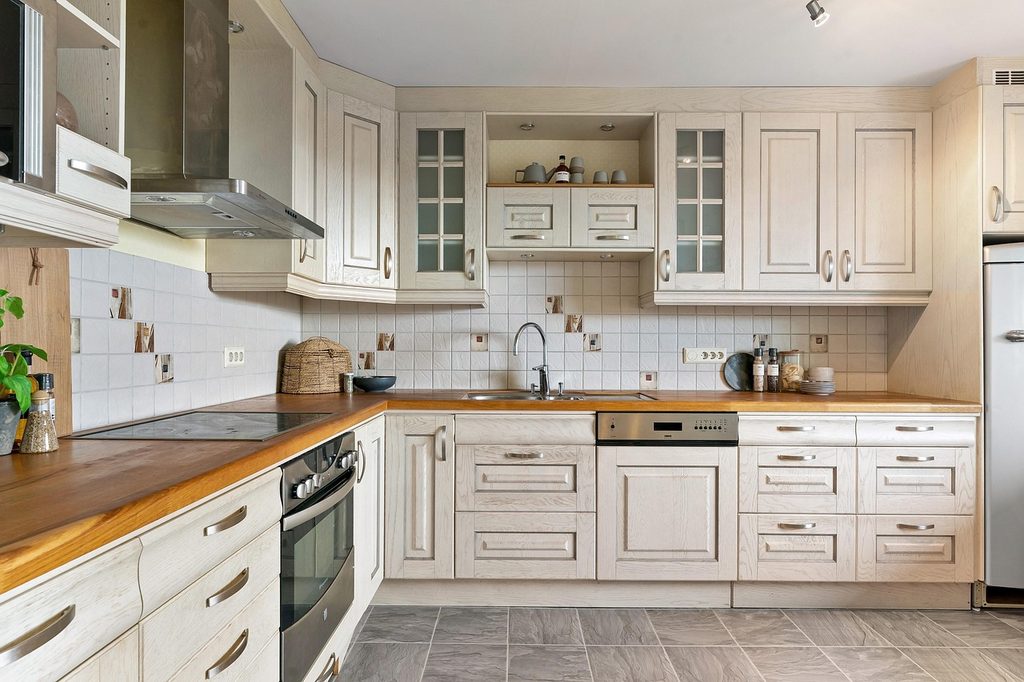
Lighting changes how the shadow line reads. A recessed panel can look flat in soft overhead light and crisper under raking light from a pendant or under-cabinet strip. Our guide to layered kitchen lighting explains how to layer light so the door detail shows.
Pantry walls and storage
Finally, think about where storage lives. A tall Shaker pantry wall gives the style its calm, furniture-like look, and our notes on pantry design show how much storage you need before you commit to doors.
Hayden Island recessed panel styles
Our studio is an authorized dealer for Hayden Island Cabinets, so it helps to say what its page does and does not tell you. The door styles page lists a group called 5 Piece Recessed Panel Doors, including Newport, Quaker, Saratoga and Sonora, and a mitered version with five more names. It also lists raised panel groups and one-piece doors.
The page does not label any door as Shaker and gives no frame widths, so this guide does not either. The practical step is to ask for samples of the five-piece recessed styles and measure the frame yourself against the table above. The finishes page shows the paint and stain options you can pair with each door.
Seeing finished rooms helps more than any spec sheet. Browse our project gallery for real kitchens, and note which door proportions you keep coming back to.
Cleaning the recessed panel
Fabuwood says the recessed center panel can collect dust and grime, and that Shaker doors need more careful cleaning than flat panels. That is a fair trade-off to price into your daily life, especially near the range, where cooking residue settles in the inner corners.
A soft cloth and mild cleaner reach those corners, and a regular wipe-down keeps buildup from setting. If you cook heavily, consider a slab front on the cabinets right beside the cooktop and Shaker everywhere else. That mixed approach is a design choice, not a compromise, and it keeps daily cleaning short.
FAQ
Shaker versus flat panel doors
Shaker adds a frame and shadow line, and flat panel is one smooth piece. Fabuwood says flat panel is easier to clean, while Shaker suits both traditional and modern rooms. NKBA’s 2026 survey shows slab gaining popularity, so choose the one that fits your cleaning habits and finishes.
Slim Shaker in a small kitchen
A slim frame looks lighter and can make a small room feel less busy. Keep the frame above the micro range on larger doors, since the Florida designer warns that very thin rails feel fragile. Ask for the exact width and a sample door.
Painted or stained Shaker doors
Both hold up when built well, but Caron says paint stress shows as hairlines at joints when humidity drops. Ask your cabinet maker how the finish handles movement, and weigh that against the color options a paint finish gives you. Plan on 30 to 50 percent indoor humidity either way.
Next step: a short conversation
If you are weighing Shaker cabinets against slab or a slimmer frame, book a free discovery call. It is an honest conversation about your home, with no sales pitch and no obligation. Ask for our free “Planning your remodel budget” guide, and use the contact page to start. You can also see how a project runs, from first sketch to final walkthrough, on our process page.