
Neither surface is maintenance free, and the advice you hear about sealing depends on who is selling. Granite is natural stone that wins on heat resistance. Engineered quartz is a factory slab of crushed stone and resin that wins on consistent pattern. One stone-industry test found it marked by hot oily cookware where the granites showed little or no lasting mark. The published prices overlap, and two of the three price tables below put entry-level granite lower.
This guide names the source behind every claim and says whether it is a seller, a trade group or a government agency. No dataset prices stone in Marin, Sonoma or Napa on its own, so the dollar figures below are national or other-city estimates. If you are still comparing every surface, our complete guide to kitchen countertop materials puts both next to the alternatives.
Quartz vs granite countertops at a glance
The table sets the two surfaces against each other on the points that change daily life in a working kitchen. The last column says who made each claim. The tests come from the Natural Stone Institute, a stone-industry group, and the sealing claim for quartz comes from Cambria, a quartz maker, so read both with that in mind.
| Question | Engineered quartz | Granite | Who says so |
|---|---|---|---|
| What it is | Quartz particles bonded with resin and pigment | Natural stone slab, often resin treated at the factory | NSI |
| Sealing | “Never needs sealing” | “Most … do not need to be sealed” | Cambria, NSI |
| Hot skillet test | Marked or hazed | Unaffected or faint | NSI, 2019 |
| Abrasive cleaner test | Hazed | Unaffected | NSI, 2019 |
| Pattern | Consistent slab to slab | Unique to each slab | Cambria |
| Crystalline silica | Under 0.2 to 95 percent | 10 to 50 percent | OSHA |
The test used two engineered quartz samples and two granites, so treat the results as a small sample, not a verdict on every brand. Still, it is the only side-by-side test this guide found that was not run by a manufacturer.
Two rows deserve a second look. The sealing row is where the sources split, and the next section untangles it. The hot skillet row is where the independent test and the quartz maker’s own page point the same way, which makes it the firmest finding here.
Sealing advice that does not agree
What the Natural Stone Institute says
Sealing is the most contradictory topic in the sources. The Natural Stone Institute’s position statement says most granite countertops do not need sealing, and that a homeowner who cleans after each meal will rarely, if ever, have staining issues. It adds that many granite counters still benefit from a sealer, and that a quality product should last ten to fifteen years.
What sellers recommend
Sellers say the opposite. Cambria says granite requires regular sealing, The Home Depot says granite needs resealing every year, and an Atlanta contractor says every one to two years. All three are selling or installing something, and the quartz maker has an obvious stake in the answer. That does not make them wrong, but it does make them a different kind of evidence from an industry position adopted in 2006.
Factory resin treatment and slab-specific advice
One detail in the institute’s statement explains part of the gap. Many species of granite get a factory resin treatment that fills tiny fissures before the slab reaches your fabricator. The institute says sealing a resin-treated top may only add to resistance that is already there. So sealing is closer to cheap insurance than a rule, and the answer depends on the stone.
Ask your fabricator for the specific slab’s sealing advice in writing, and ask whether it has been resin treated. For daily cleaning, the institute’s care page says to use a neutral cleaner, stone soap or mild dish detergent with warm water, and to skip acidic products. For more on where to spend and where to save, see our tips to help you save when remodeling.
Heat, scratches and chips
Heat resistance and hot cookware
Heat favors granite, and even the quartz maker says so. Cambria’s comparison page states that granite counters excel in heat resistance and impact durability. The institute’s 2019 test shows why: a hot dry skillet left no visible effect on either granite, while it left a temporary mark on one quartz sample.
The hot oily skillet separated them further. One granite showed a slight stain that faded in 24 hours, and the other showed a very subtle darkening. A quartz sample, Sequel Pure Black, kept a permanent haze, and the other, Caesarstone Eggshell, took a stain that took days to fade. HomeGuide’s 2023 comparison agrees that quartz is damaged by high heat.
Scratch resistance: conflicting evidence
Scratching is less clear. In the same test, the granites measured between 6 and 7 on the Mohs scale, while the two quartz samples scratched more readily. Cambria’s own chart rates quartz at 7 out of 10 and granite at 3 to 7, which is a manufacturer’s chart and not a test. The two sources disagree, so treat scratch hardness as unsettled until you see the actual slab.
Edge chips and impact resistance
In the sources, chips are an edge problem. Cambria says granite is susceptible under heavy impact on the edge, and the Atlanta contractor says granite edges may chip under heavy use. This guide found no independent test of chip resistance, so the claim stays with its sellers. Whichever you choose, the institute recommends trivets or mats even though many stones tolerate heat. For planning counter space around the stove, see our notes on how to maximize kitchen space.
Pattern, slab choice and sunlight
Pattern consistency and choosing the slab
Granite is one of a kind. Cambria says each granite slab features unique patterns and is not consistent from slab to slab, while engineered quartz offers a uniform look. That is a plain difference in how the materials form, and it matters most when a long run of counter and an island share one stone.
If you want the same look in every corner, quartz gives you more control, and our guide to minimalist kitchen design shows what a calm palette can look like. If you like a counter with visible movement, granite gives you that, and you should pick the slab in person. Pick the cabinets and the stone together, because each changes how the other reads.
Our roundup of top kitchen cabinet trends helps with the cabinet side, and our look at kitchen islands that steal the spotlight covers the island as a focal point.
Sunlight and outdoor exposure
Sunlight is the quiet issue for quartz. The Natural Stone Institute left engineered quartz slabs outdoors for months and found that the resin turned yellow. HomeGuide says UV rays may change quartz color and does not recommend it outdoors. Those sources do not report the same problem for granite, so a bright window wall or patio counter is where the choice matters. For a room that opens to the yard, our open-concept kitchen ideas cover the sightlines and light you will plan around.
Cost, with dates and disagreements
The sources disagree on level and agree on price overlap. The table lists each estimate with its date and its kind of source, because a 2023 lead-generation page and an October 2026 contractor page are not the same evidence.
| Source and date | Engineered quartz, installed per sq ft | Granite, installed per sq ft |
|---|---|---|
| HomeGuide, 2023 | $50 to $200 | $80 to $150 |
| SlabWise, July 2026 | $50 to $120 | $40 to $100 |
| Atlanta contractor, October 2026 | $105 to $185 | $95 to $225 |
The disagreement comes from year, region and scope. HomeGuide says quartz often costs slightly more than granite. SlabWise, a software vendor, says the gap is about $10 to $30 per square foot on mid-range slabs, with entry-level granite and entry-level quartz sometimes nearly equal. The Atlanta contractor says granite starts lower but rises for exotic slabs and complex edges.
The shared conclusion is that slab choice moves the price more than the category. SlabWise’s grade table, covered in the FAQ, shows the same thing inside granite alone, where basic slabs and exotic ones sit far apart. Edges and cutouts add to either quote, and HomeGuide lists granite sink cutouts at $100 to $300 and quartz edges at $10 to $60 per linear foot. Our guide to planning a modern kitchen remodel without overspending shows where counters sit in the total budget.
Get same-layout quotes on named slabs, and ask what the quote includes. For layout choices that change how much counter you buy, see our smart kitchen design tips.
Silica and what to ask the fabricator
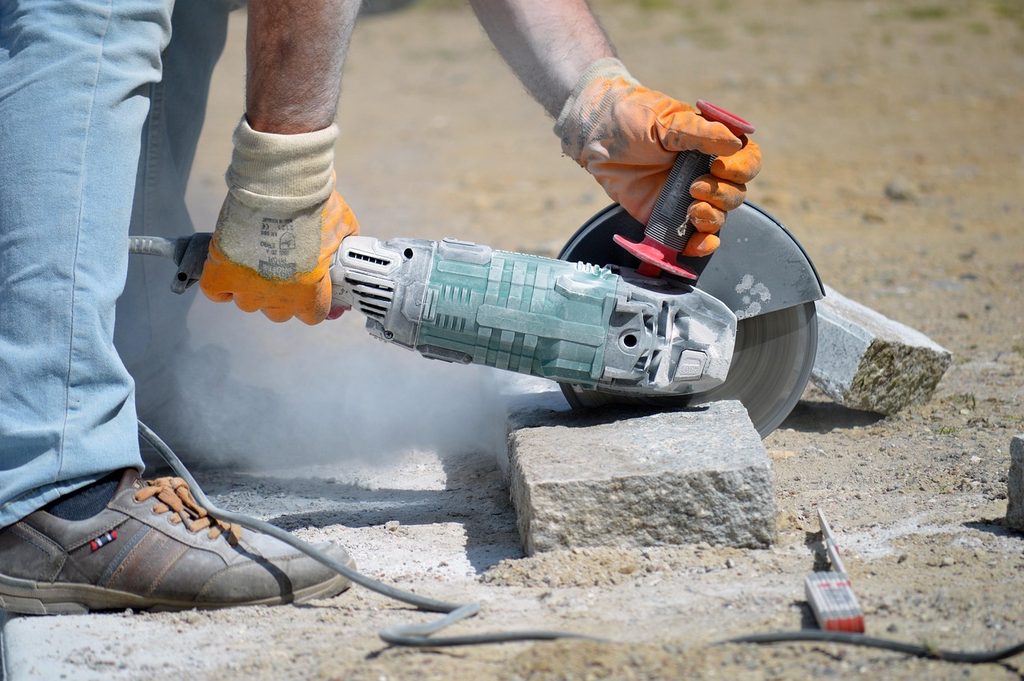
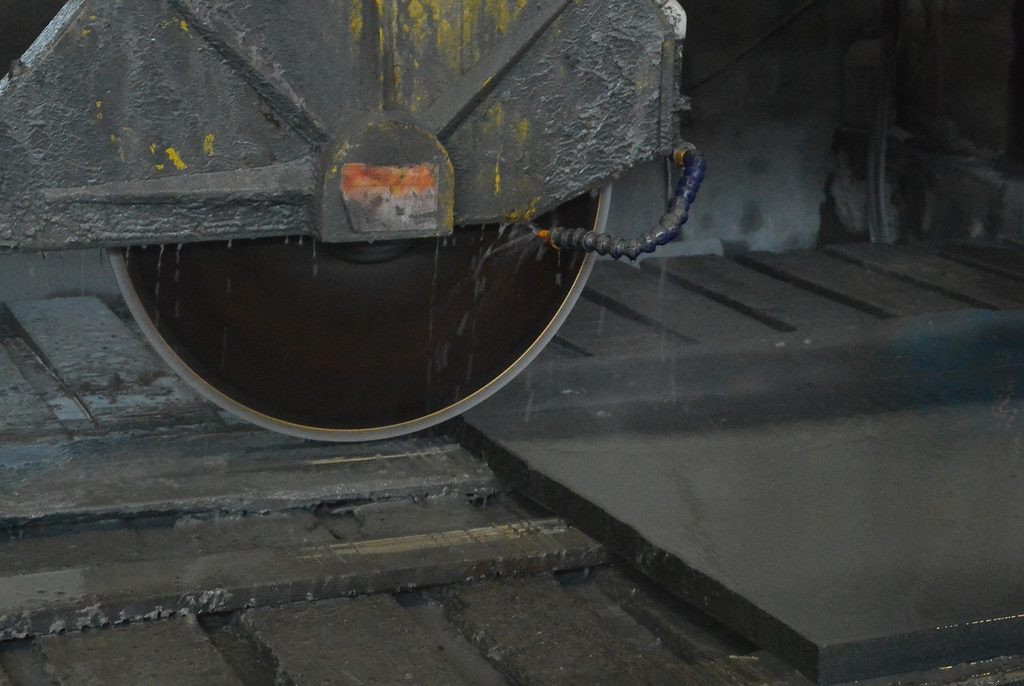
Both materials contain crystalline silica, and the amount differs by product. OSHA’s countertop publication lists granite at 10 to 50 percent and engineered stone from under 0.2 to 95 percent. Cutting and grinding release respirable dust, which can cause silicosis, and the agency advises avoiding dry cutting and doing as much work as possible in a controlled shop.
California’s current rulemaking concerns the engineered side. In May 2026, the state’s Standards Board voted to begin the process of prohibiting artificial stone with more than 1 percent crystalline silica. That petition does not name natural granite, and this guide found no evidence that a prohibition is in effect. If you choose engineered quartz, ask your fabricator whether it is tracking the state rulemaking.
For either surface, ask how the shop controls dust and where the cutting happens. A clear answer shows how the shop works. Our guide to working with a kitchen and bath designer explains who coordinates those questions during a kitchen remodel.
A verdict by household
When natural granite fits your household
Choose natural granite if you cook hard and set pans down fast, you like natural variation and you want the lower entry price that two of the three cost tables above show for basic slabs. Plan to ask about sealing and accept that the slab you choose is the slab you get. The institute’s evidence supports its heat performance and its resistance to abrasive cleaners.
When engineered quartz fits your household
Choose engineered quartz if you want one consistent pattern, you rarely face a hot pan and the counter stays out of strong sun. It suits a household that prefers a surface without a sealing question. Be honest about the limits, which are heat damage, abrasive cleaners and strong sunlight, and keep a trivet by the stove.
Balancing daily use, light and budget
A family with kids and a busy stove should weigh heat resistance first, since it is the clearest gap in the evidence. A household that entertains in a bright open room should weigh sunlight and pattern. A buyer on a tight budget should ask for quotes on both and compare real slabs, because the ranges overlap.
For a bathroom, the same logic applies at a smaller scale. Our guide to the best materials for a kitchen remodel and the one on guest bathroom remodels that last help you carry the choice through the whole house.
FAQ
Radon in granite countertops
The EPA says the existing data are insufficient to conclude that the granite commonly used in countertops significantly increases indoor radon. It names soil contact with basement floors and walls as the principal source in homes. The agency strongly recommends that every home be tested for radon, whatever the counters are made of.
Cleaning products for each surface
For granite, the Natural Stone Institute recommends a neutral cleaner, stone soap or mild dish detergent, and it warns that scouring powders may contain abrasives. Its 2019 test found that Bar Keepers Friend hazed both quartz samples but not the granites. Cambria suggests warm water, a soft cloth and mild soap for its quartz.
Granite price grades
SlabWise, a software vendor, prices granite by grade level. It lists Level 1 at $40 to $60 per square foot installed and Level 5 at $140 to $200 or more. The spread explains why granite estimates vary, so ask which grade a quote assumes.
Your next step is a conversation
Not sure which stone fits your kitchen? Book a free discovery call. It is an honest conversation about your home, with no sales pitch and no obligation. Ask for our free “Planning your remodel budget” guide while you are there, and use the contact page to start. You can also see how a project runs, from first sketch to final walkthrough, on our process page.